

As a supplier of rubber seal strips, I often encounter questions from customers regarding various technical aspects of our products. One of the most frequently asked questions is about the compression set of a rubber seal strip. In this blog post, I will delve into what compression set is, why it matters, and how it affects the performance of rubber seal strips.
Understanding Compression Set
Compression set is a critical property that measures the ability of a rubber material to recover its original shape after being compressed for a certain period under specific conditions. When a rubber seal strip is installed, it is typically compressed between two surfaces to create a seal. Over time, the rubber may lose some of its elasticity, and it may not fully return to its original shape once the compressive force is removed. This permanent deformation is known as the compression set.
Mathematically, compression set is expressed as a percentage. A lower compression set percentage indicates that the rubber has better recovery properties and is more likely to maintain its sealing performance over time. For example, if a rubber seal strip has a compression set of 10%, it means that after being compressed and then released, it will only retain 90% of its original thickness.
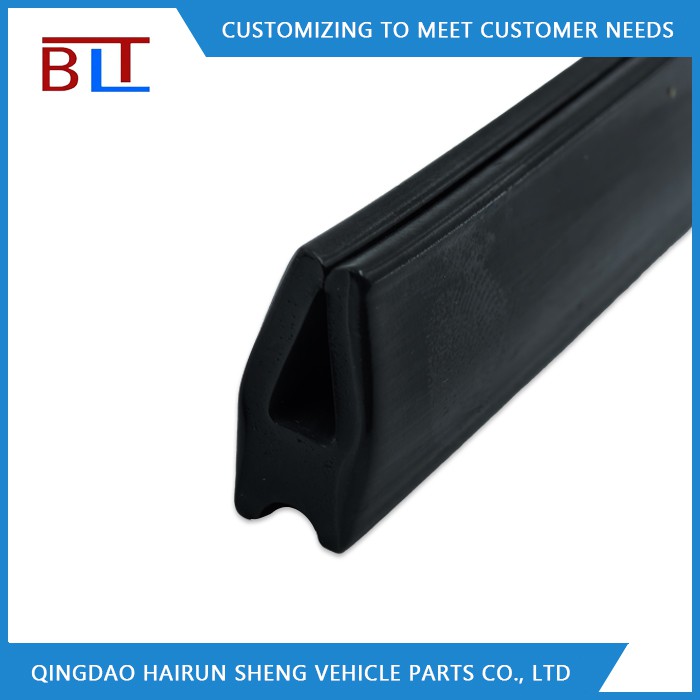

Factors Affecting Compression Set
Several factors can influence the compression set of a rubber seal strip. Understanding these factors is crucial for selecting the right material and ensuring the long - term performance of the seal.
Rubber Material
Different types of rubber have varying compression set characteristics. For instance, silicone rubber generally has a low compression set, making it suitable for applications where long - term sealing and high - temperature resistance are required. On the other hand, natural rubber may have a higher compression set, especially when exposed to elevated temperatures or harsh chemicals.
Temperature
Temperature plays a significant role in the compression set of rubber. As the temperature increases, the rubber molecules become more mobile, which can lead to a higher compression set. High - temperature applications require rubber materials that are specifically formulated to withstand heat and maintain their elasticity. For example, in automotive engines, where temperatures can reach several hundred degrees Celsius, special high - temperature rubber compounds are used for seal strips.
Compression Ratio
The amount of compression applied to the rubber seal strip also affects its compression set. A higher compression ratio (the ratio of the compressed thickness to the original thickness) can cause more permanent deformation. It is important to design the sealing system in such a way that the compression ratio is within the recommended range for the specific rubber material.
Time
The longer the rubber seal strip is under compression, the more likely it is to develop a higher compression set. In applications where the seal is constantly under pressure, such as in hydraulic systems, the choice of rubber material with low compression set is essential to ensure long - term sealing performance.
Importance of Compression Set in Rubber Seal Strips
The compression set of a rubber seal strip is directly related to its sealing effectiveness. A seal with a high compression set may not be able to maintain a proper seal over time, leading to leaks. This can be a major problem in various industries, such as construction, automotive, and aerospace.
In the construction industry, Door Sealing Strip are used to prevent air and water infiltration. If the compression set of the seal strip is too high, it may not provide an effective barrier against the elements, resulting in energy loss and potential water damage to the building.
In the automotive industry, rubber seal strips are used in engine compartments, doors, and windows. A seal with poor compression set can lead to engine oil leaks, water ingress into the cabin, and reduced fuel efficiency due to air leakage.
Measuring Compression Set
Compression set is typically measured using standardized test methods, such as ASTM D395. In this test, a rubber specimen is compressed to a specific thickness and held at a constant temperature for a specified period. After the test period, the specimen is allowed to recover for a certain time, and then its final thickness is measured. The compression set is calculated as the percentage difference between the original thickness and the final thickness.
Selecting the Right Rubber Seal Strip Based on Compression Set
When choosing a rubber seal strip, it is important to consider the application requirements and select a material with an appropriate compression set. As a Rubber Seal Strip supplier, we offer a wide range of rubber materials, each with different compression set characteristics.
For applications where low compression set is critical, such as in high - precision equipment or long - term sealing applications, we recommend using silicone rubber or fluorocarbon rubber. These materials have excellent resistance to heat, chemicals, and aging, and they can maintain their sealing performance over an extended period.
For more cost - effective solutions in less demanding applications, natural rubber or EPDM rubber may be suitable. However, it is important to ensure that the compression set of these materials meets the requirements of the specific application.
Extruded Rubber Seal Strips and Compression Set
Extruded Rubber Seal Strip are a popular choice for many applications due to their versatility and cost - effectiveness. During the extrusion process, the rubber is shaped into a continuous strip with a specific cross - section. The extrusion process can also affect the compression set of the rubber seal strip.
Proper control of the extrusion parameters, such as temperature, pressure, and speed, is essential to ensure uniform material properties and a consistent compression set throughout the length of the seal strip. Our company uses advanced extrusion technology to produce high - quality extruded rubber seal strips with excellent compression set characteristics.
Conclusion
In conclusion, the compression set of a rubber seal strip is a crucial property that directly affects its sealing performance and longevity. As a supplier of rubber seal strips, we understand the importance of providing our customers with products that meet their specific requirements. By considering factors such as rubber material, temperature, compression ratio, and time, we can help our customers select the right rubber seal strip for their applications.
If you are in need of high - quality rubber seal strips with low compression set, we invite you to contact us for a detailed discussion about your requirements. Our team of experts is ready to assist you in finding the best solution for your sealing needs. Whether you are in the construction, automotive, or any other industry, we have the expertise and products to meet your demands.
References
- ASTM D395 - Standard Test Methods for Rubber Property - Compression Set.
- "Handbook of Elastomers" by Brian M. Walker.
- "Rubber Technology: Compounding, Testing, and Applications" by David A. Thomas.