

Are rubber door seals available in different profiles? You bet they are! As a supplier of Rubber Door Seals, I've seen firsthand the wide variety of profiles out there. In this blog, I'm gonna break down the different profiles, their uses, and why you might choose one over the other.
Let's start with the basics. Rubber door seals come in all shapes and sizes to fit different needs. The profile of a rubber door seal refers to its cross-sectional shape. This shape determines how the seal will fit and function in a particular application.
One of the most common profiles is the bulb seal. This type of seal has a rounded, bulbous shape on one side. The bulb provides a soft, flexible barrier that can compress easily when the door is closed. It's great for creating an airtight and watertight seal. Bulb seals are often used in residential and commercial doors, especially those that need to keep out drafts, noise, and moisture. For example, if you have an old door that lets in a lot of cold air during the winter, a bulb seal can help to insulate your home and save on energy costs.
Another popular profile is the T-shaped seal. As the name suggests, this seal has a T-shaped cross-section. The top part of the T fits into a groove or channel, while the bottom part provides the sealing surface. T-shaped seals are commonly used in sliding doors and windows. They offer a secure fit and can prevent dust, dirt, and insects from entering the building. If you have a sliding glass door that seems to collect a lot of dirt around the edges, a T-shaped seal can help to keep it clean and functioning properly.
Then there's the D-shaped seal. This seal has a semi-circular cross-section, resembling the letter D. D-shaped seals are often used in applications where a tight seal is needed around a curved or irregular surface. They can be found in automotive doors, refrigerators, and cabinets. For instance, if you have a cabinet that needs to keep out moisture and odors, a D-shaped seal can provide an effective solution.
U-shaped seals are also quite common. These seals have a U-shaped cross-section, with the open part of the U facing outwards. U-shaped seals are typically used to seal gaps between two surfaces. They can be installed on the edges of doors, windows, or panels to prevent air and water leakage. If you have a door that has a gap at the bottom, a U-shaped seal can be attached to the bottom of the door to create a tight seal with the floor.
Now, let's talk about Box And Cabinet Sealing Strip. These are specialized rubber door seals designed specifically for boxes and cabinets. They come in various profiles, such as rectangular, square, and L-shaped, to fit different types of boxes and cabinets. Box and cabinet sealing strips are used to keep out dust, moisture, and pests. They can also help to maintain the temperature and humidity inside the box or cabinet, which is important for storing sensitive items like electronics, documents, and food.
In addition to these standard profiles, we also offer custom-made rubber door seals. If you have a unique application that requires a specific profile, we can work with you to design and manufacture a seal that meets your exact requirements. Our team of experts has the knowledge and experience to create custom seals that are both functional and durable.

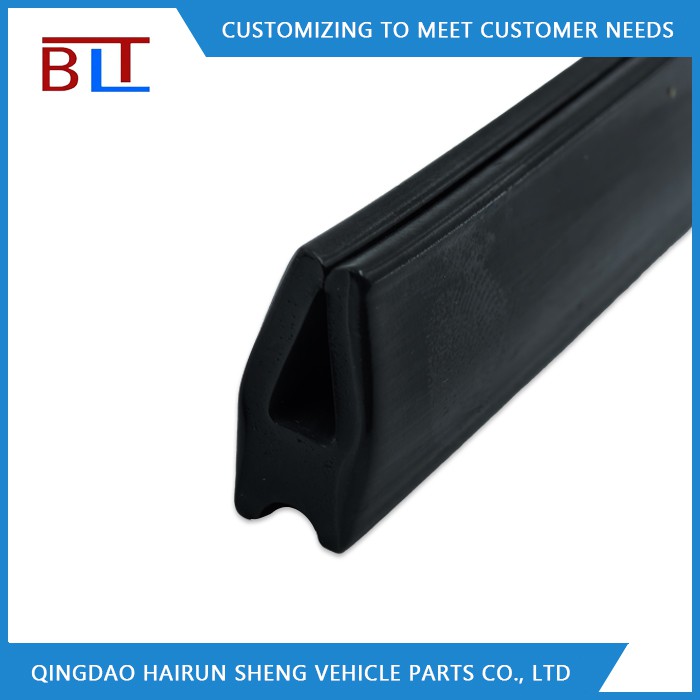
So, why does the profile of a rubber door seal matter? Well, the right profile can make a big difference in the performance of the seal. A poorly fitting seal can lead to air and water leakage, which can cause energy loss, damage to the building structure, and even health problems. On the other hand, a well-designed seal can provide a tight, long-lasting seal that helps to keep your home or business comfortable, safe, and energy-efficient.
When choosing a rubber door seal, it's important to consider the following factors:
- Application: What is the seal going to be used for? Is it for a residential door, a commercial building, or a specific piece of equipment?
- Environment: What kind of environment will the seal be exposed to? Will it be exposed to extreme temperatures, moisture, chemicals, or UV radiation?
- Compatibility: Does the seal need to be compatible with other materials, such as metal, plastic, or glass?
- Size and shape: What are the dimensions and shape of the gap or opening that needs to be sealed?
- Performance requirements: What are the specific performance requirements of the seal, such as airtightness, watertightness, noise reduction, or insulation?
By taking these factors into account, you can choose the right rubber door seal profile for your needs. And if you're not sure which profile is best for you, don't hesitate to contact us. We're here to help you find the perfect seal for your application.
In conclusion, rubber door seals are available in a wide variety of profiles to suit different applications and needs. Whether you need a bulb seal for your home door, a T-shaped seal for your sliding window, or a custom-made seal for your unique project, we've got you covered. As a leading supplier of Rubber Door Seals, we offer high-quality seals at competitive prices. If you're interested in learning more about our products or would like to discuss your specific requirements, please feel free to reach out to us. We look forward to working with you!
References
- Various industry standards and guidelines related to rubber door seals
- Internal product catalogs and technical documentation from our company