

Resilience is a crucial property when it comes to rubber seal strips. As a reliable supplier of rubber seal strips, I've witnessed firsthand how resilience impacts the performance, durability, and effectiveness of these essential components. In this blog, we'll explore what resilience means for rubber seal strips, why it matters, and how it influences various applications.
Understanding Resilience in Rubber Seal Strips
Resilience, in the context of rubber seal strips, refers to the material's ability to recover its original shape and dimensions after being deformed by an external force. When a rubber seal strip is compressed, stretched, or bent, resilience determines how well it can bounce back to its initial form once the force is removed. This property is directly related to the molecular structure of the rubber.
Rubber is a polymer material composed of long chains of molecules. These chains are flexible and can be easily rearranged when a force is applied. In a resilient rubber, the molecular chains have a natural tendency to return to their original configuration after the deforming force is eliminated. This elastic behavior is what allows rubber seal strips to maintain a tight seal over time, even under repeated stress.
Why Resilience Matters
Sealing Performance
The primary function of a rubber seal strip is to create a barrier that prevents the passage of air, water, dust, and other contaminants. Resilience ensures that the seal strip can maintain a consistent contact with the sealing surface, even when exposed to varying pressures and temperatures. For example, in a Curtain Wall Sealing Rubber Strip, high resilience allows it to adapt to the movement of the curtain wall panels due to thermal expansion and contraction. This helps to prevent water leakage and air infiltration, which can lead to energy loss and damage to the building interior.
Durability
Resilient rubber seal strips are more resistant to wear and tear. When a seal strip is repeatedly compressed or stretched, a low - resilience material may gradually lose its ability to recover, resulting in permanent deformation. Over time, this can lead to gaps in the seal, reducing its effectiveness. On the other hand, a highly resilient rubber seal strip can withstand thousands of cycles of compression and relaxation without significant loss of its sealing properties. This means a longer service life and less frequent replacement, which is cost - effective for end - users.
Vibration and Noise Reduction
In applications such as Door Sealing Strip, resilience plays a vital role in reducing vibration and noise. When a door closes, the seal strip absorbs the impact energy and reduces the noise generated by the contact between the door and the frame. The ability to recover quickly after deformation allows the seal strip to continue to provide effective noise and vibration reduction over time.
Factors Affecting the Resilience of Rubber Seal Strips
Rubber Material
Different types of rubber have different levels of resilience. Natural rubber, for example, is known for its high resilience due to its long, coiled molecular chains. Synthetic rubbers such as EPDM (Ethylene Propylene Diene Monomer) also offer good resilience, along with excellent resistance to weathering, ozone, and chemicals. Silicone rubber has moderate resilience but is highly resistant to high and low temperatures. The choice of rubber material depends on the specific requirements of the application, such as the operating temperature range, chemical exposure, and mechanical stress.
Cross - Linking
Cross - linking is a chemical process that forms bonds between the rubber molecules. The degree of cross - linking affects the resilience of the rubber. A optimal level of cross - linking creates a balance between flexibility and elasticity, allowing the rubber to deform under stress and then recover its original shape. If the cross - linking is too high, the rubber may become rigid and lose its resilience. Conversely, if the cross - linking is too low, the rubber may be too soft and prone to permanent deformation.
Temperature
Temperature has a significant impact on the resilience of rubber seal strips. In general, rubber becomes less resilient at low temperatures as the molecular chains become more rigid. At high temperatures, the rubber may become softer, and its resilience may also decrease. However, some types of rubber, such as silicone rubber, can maintain relatively good resilience over a wide temperature range. It's important to select a rubber seal strip that is suitable for the expected temperature conditions of the application.
Measuring Resilience
One common method to measure the resilience of rubber is the rebound resilience test. In this test, a small sample of rubber is dropped onto a hard surface from a specific height, and the height of the rebound is measured. The ratio of the rebound height to the drop height is expressed as a percentage, which represents the rebound resilience of the rubber. A higher percentage indicates greater resilience.
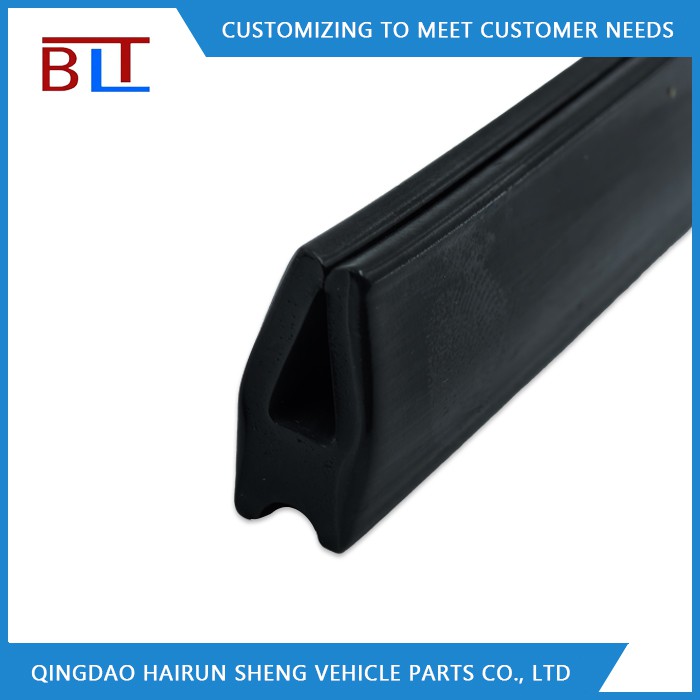

Another method is the compression set test. A rubber sample is compressed to a specific thickness for a certain period of time at a specified temperature. After the compression is released, the sample is allowed to recover for a set time, and then the remaining deformation is measured. A lower compression set value means better resilience, as it indicates that the rubber can recover more fully after being compressed.
Applications of Resilient Rubber Seal Strips
Construction Industry
In the construction industry, rubber seal strips are widely used in various applications. Curtain Wall Sealing Rubber Strip helps to seal the joints between curtain wall panels, preventing water leakage and air infiltration. Door Sealing Strip provides a tight seal around doors, improving energy efficiency and reducing noise. Expansion Joint Rubber Strip is used to accommodate the movement of building structures due to thermal expansion and contraction, while maintaining a watertight and airtight seal.
Automotive Industry
In the automotive industry, rubber seal strips are used in doors, windows, sunroofs, and trunk lids. They provide a seal against water, dust, and noise, while also contributing to the overall comfort and safety of the vehicle. Resilient rubber seal strips can withstand the constant opening and closing of doors and windows, as well as the vibrations and temperature changes experienced during driving.
Industrial Machinery
Industrial machinery often uses rubber seal strips to seal hydraulic cylinders, pumps, and valves. The resilience of the seal strips ensures a leak - free operation, even under high - pressure conditions. They also help to protect the internal components of the machinery from contaminants and damage.
Contact Us for Resilient Rubber Seal Strips
If you're in the market for high - quality rubber seal strips with excellent resilience, don't hesitate to contact us. Our team of experts can help you select the right rubber material and design for your specific application. We offer a wide range of rubber seal strips, including Curtain Wall Sealing Rubber Strip, Door Sealing Strip, and Expansion Joint Rubber Strip. Let's start a conversation about how our rubber seal strips can meet your needs and provide long - lasting performance.
References
- ASTM D1054 - Standard Test Method for Rubber Property - Resilience Using a Rebound Pendulum
- ASTM D395 - Standard Test Methods for Rubber Property - Compression Set
- "Rubber Technology" by Maurice Morton