

Hey there! As a supplier of Rubber Container Door Seals, I often get asked about the hardness of these seals. So, I thought I'd take a few minutes to break it down for you.
First off, what exactly is hardness when it comes to rubber container door seals? Well, hardness is a measure of how resistant a material is to indentation or deformation. In the case of rubber seals, it's an important factor because it affects how well the seal can perform its job.
There are different scales used to measure the hardness of rubber, but the most common one is the Shore scale. The Shore scale ranges from 0 to 100, with lower numbers indicating a softer rubber and higher numbers indicating a harder rubber. For rubber container door seals, the hardness typically falls within the range of 40 to 80 Shore A.
Let's talk about why hardness matters. A softer rubber seal (lower Shore A value) is more flexible and can conform better to irregular surfaces. This means it can create a better seal, especially in situations where the container door may not be perfectly flat or where there are small gaps. Soft seals are also less likely to cause damage to the door or the surrounding area when they're installed or removed.
On the other hand, a harder rubber seal (higher Shore A value) is more rigid and can withstand more pressure. This makes it a good choice for applications where the seal needs to resist high levels of compression or where there's a risk of the seal being pinched or squeezed. Hard seals are also more resistant to wear and tear, which can extend their lifespan.
So, how do you choose the right hardness for your rubber container door seals? Well, it depends on a few factors. First, you need to consider the type of container and the environment it will be used in. If the container is going to be exposed to extreme temperatures, high humidity, or harsh chemicals, you may need a harder seal that can withstand these conditions.
You also need to think about the specific requirements of your application. For example, if you're using the seal to prevent water or air leakage, a softer seal may be more effective. But if you're using the seal to prevent the entry of dust or debris, a harder seal may be a better choice.
At our company, we offer a wide range of rubber container door seals with different hardness levels to meet the needs of our customers. Whether you need a soft seal for a delicate application or a hard seal for a heavy-duty one, we've got you covered.
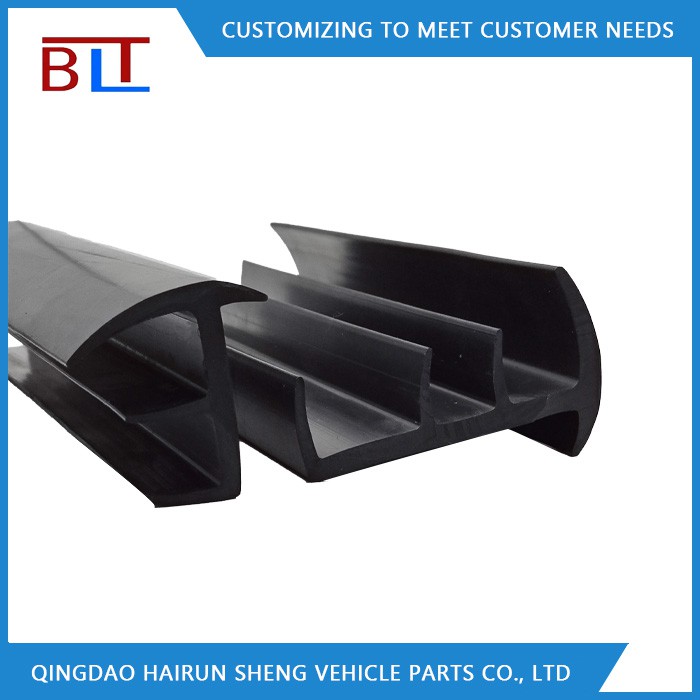
Now, let me introduce you to some of our popular products. We have the J Type Container Door Seals EPDM Seal Strip, which is made from high-quality EPDM rubber and has a medium hardness level. This seal is designed to provide a tight and reliable seal for container doors, and it's resistant to weathering, ozone, and UV radiation.
Another great product is our Flame Retardant Sealing Strip. This seal is made from a special rubber compound that has been treated to be flame retardant, making it a safe choice for applications where there's a risk of fire. It has a hard hardness level, which makes it suitable for high-pressure applications.
We also offer the Windshield Weatherstrip, which is a soft rubber seal that's designed to provide a weatherproof seal for windshields. This seal is flexible and easy to install, and it can help to reduce noise and vibration inside the container.

In conclusion, the hardness of rubber container door seals is an important factor to consider when choosing the right seal for your application. By understanding the different hardness levels and how they affect the performance of the seal, you can make an informed decision and ensure that your container doors are properly sealed.
If you're interested in learning more about our rubber container door seals or if you have any questions, please don't hesitate to contact us. We're here to help you find the perfect seal for your needs.
References:
- ASTM D2240 - Standard Test Method for Rubber Property - Durometer Hardness
- ISO 7619-1 - Rubber, vulcanized or thermoplastic - Determination of indentation hardness - Part 1: Durometer method (Shore hardness)