

What is the hardness level of a container sealing strip?
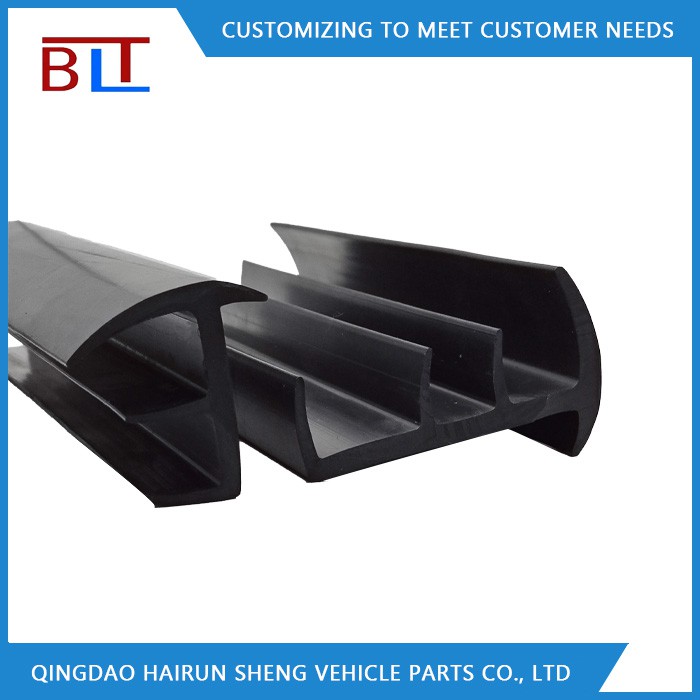
As a supplier of container sealing strips, I often encounter inquiries from customers regarding the hardness level of these crucial components. The hardness of a container sealing strip plays a pivotal role in its performance, durability, and suitability for various applications. In this blog post, I will delve into the concept of hardness in container sealing strips, its significance, and how it impacts the overall functionality of these products.
Understanding Hardness in Container Sealing Strips
Hardness in container sealing strips refers to the material's resistance to indentation or deformation when subjected to an external force. It is a fundamental property that determines the strip's ability to maintain its shape, provide an effective seal, and withstand the rigors of daily use. The hardness of a sealing strip is typically measured using the Shore durometer scale, which assigns a numerical value to the material's hardness. The Shore scale has different types, with Shore A being the most commonly used for elastomeric materials like rubber, which are widely employed in container sealing strips.
The Shore A scale ranges from 0 to 100, with lower values indicating a softer material and higher values representing a harder one. For container sealing strips, the hardness level can vary depending on the specific requirements of the application. Softer sealing strips (lower Shore A values) are more flexible and can conform better to irregular surfaces, providing a tight seal even in areas with slight imperfections. On the other hand, harder sealing strips (higher Shore A values) offer greater resistance to wear, abrasion, and compression set, making them suitable for applications where durability and long - term performance are crucial.
Significance of Hardness in Container Sealing Applications
Sealing Performance
The hardness of a container sealing strip directly affects its sealing performance. A strip with the appropriate hardness can create a reliable barrier against the ingress of water, dust, air, and other contaminants. Softer sealing strips can deform easily to fill gaps and irregularities between the container components, ensuring a tight and leak - proof seal. This is particularly important in applications where the container needs to be completely sealed to protect its contents from environmental factors. For example, in the transportation of perishable goods, a proper seal is essential to maintain the temperature and humidity inside the container, preventing spoilage.
Durability and Longevity
Hardness also influences the durability and longevity of the container sealing strip. Harder sealing strips are more resistant to wear and tear, as they can withstand the repeated opening and closing of the container doors, as well as the friction and pressure exerted during handling. They are less likely to be damaged by sharp objects or rough surfaces, which can prolong their service life. In contrast, softer sealing strips may be more prone to damage, especially in high - traffic or harsh environments. However, if the hardness is too high, the strip may become brittle and lose its ability to form a proper seal over time.
Compatibility with Container Materials
The hardness of the sealing strip must be compatible with the materials of the container. For instance, if the container is made of a soft material, a very hard sealing strip may cause damage to the container surface during installation or use. Conversely, if the container has rigid components, a soft sealing strip may not provide sufficient support and may be squeezed out of place. Therefore, it is essential to select a sealing strip with the appropriate hardness to ensure proper fit and compatibility with the container.
Factors Affecting the Hardness of Container Sealing Strips
Material Composition
The material composition of the container sealing strip is one of the primary factors influencing its hardness. Different types of rubber, such as natural rubber, neoprene, EPDM (ethylene propylene diene monomer), and silicone, have different inherent hardness characteristics. For example, EPDM is known for its good balance of hardness, flexibility, and resistance to weathering, making it a popular choice for container sealing strips. Manufacturers can also adjust the hardness of the rubber by adding fillers, plasticizers, or other additives during the manufacturing process.
Manufacturing Process
The manufacturing process can also have an impact on the hardness of the container sealing strip. The curing time, temperature, and pressure during the vulcanization process can affect the cross - linking density of the rubber, which in turn influences its hardness. A longer curing time or higher curing temperature may result in a harder sealing strip, while a shorter or milder curing process may produce a softer one. Additionally, the extrusion process used to shape the sealing strip can affect its hardness distribution, ensuring uniform hardness throughout the strip.
Recommended Hardness Levels for Different Container Applications
General - Purpose Containers
For general - purpose containers used in normal environmental conditions, a sealing strip with a Shore A hardness of around 50 - 60 is often recommended. This hardness level provides a good balance between flexibility and durability, allowing the strip to conform to the container surfaces while still being able to withstand regular use. These strips are suitable for a wide range of applications, including storage containers, shipping containers, and some industrial equipment enclosures.

High - Traffic or Harsh Environments
In high - traffic or harsh environments, such as ports, construction sites, or areas with extreme weather conditions, a harder sealing strip with a Shore A hardness of 60 - 70 may be more appropriate. These strips can better resist the abrasion and damage caused by frequent handling, exposure to rough surfaces, and harsh chemicals. They are also more resistant to compression set, ensuring that the seal remains effective over a longer period.
Specialized Applications
For specialized applications, such as those requiring low - temperature resistance or flame retardancy, the hardness requirements may vary. For Low Temperature Sealing Rubber Strip, a softer material may be preferred to maintain flexibility at low temperatures. These strips typically have a Shore A hardness in the range of 40 - 50. On the other hand, Flame Retardant Sealing Strip may require a harder material to meet the fire - safety standards while still providing an effective seal. The hardness of these strips can range from 55 - 70 Shore A, depending on the specific requirements.
Choosing the Right Hardness for Your Container Sealing Needs
When selecting a container sealing strip, it is crucial to consider the specific requirements of your application. Here are some steps to help you choose the right hardness:
- Assess the Application Environment: Consider the temperature, humidity, exposure to chemicals, and frequency of use. Harsh environments may require a harder sealing strip, while more forgiving conditions may allow for a softer one.
- Evaluate the Container Design: Take into account the shape, size, and surface finish of the container components. Irregular surfaces may require a more flexible sealing strip, while rigid components may work well with a harder one.
- Understand the Sealing Requirements: Determine the level of sealing performance needed, such as the degree of protection against water, air, or dust. A higher level of sealing may require a softer strip for better conformity.
- Consult with a Supplier: As a container sealing strip supplier, I have extensive experience in helping customers choose the right product for their needs. I can provide technical advice and samples to help you make an informed decision.
Conclusion
The hardness level of a container sealing strip is a critical factor that affects its performance, durability, and suitability for different applications. By understanding the concept of hardness, its significance, and the factors that influence it, you can make a more informed decision when selecting a sealing strip for your container. Whether you are looking for a general - purpose strip or a specialized one for a particular application, such as Low Temperature Sealing Rubber Strip or Flame Retardant Sealing Strip, choosing the right hardness is essential for ensuring a reliable and long - lasting seal.
If you are in the market for container sealing strips, I invite you to contact me to discuss your specific requirements. I am committed to providing high - quality products and excellent customer service. Let's work together to find the perfect sealing solution for your containers.
References
- "Handbook of Elastomers" by James E. Mark, Burak Erman, and Charles L. Roth.
- "Rubber Technology: Compounding, Mixing, and Vulcanization" by Maurice Morton.
- Technical literature from rubber and sealing strip manufacturers.