

As a supplier of strip seals for containers, I often encounter questions from customers regarding various technical aspects of our products. One of the most frequently asked questions is about the elongation rate of strip seals for containers. In this blog, I'll delve into what the elongation rate is, why it matters, and how it relates to the performance of our container strip seals.
Understanding Elongation Rate
The elongation rate, also known as the elongation at break, is a crucial mechanical property that measures how much a material can stretch before it breaks. It is expressed as a percentage of the original length of the material. For instance, if a strip seal with an original length of 100 mm can stretch to 200 mm before breaking, its elongation rate is 100%.
In the context of strip seals for containers, the elongation rate is a vital characteristic because these seals are often subjected to various stresses during installation, transportation, and normal use. They may need to stretch around corners, fit into irregular spaces, or withstand pressure changes. A high elongation rate indicates that the seal can deform significantly without breaking, ensuring a tight and long - lasting seal.
Factors Affecting the Elongation Rate of Container Strip Seals
Material Composition
The type of material used in the strip seal has a profound impact on its elongation rate. Most container strip seals are made from rubber or rubber - like materials, such as EPDM (Ethylene Propylene Diene Monomer). EPDM is a popular choice due to its excellent weather resistance, ozone resistance, and high elongation rate.
EPDM can typically have an elongation rate ranging from 300% to 600%, depending on its formulation. Other materials, like neoprene or silicone rubber, also have different elongation properties. Neoprene offers good oil and chemical resistance but may have a lower elongation rate compared to EPDM in some cases. Silicone rubber, on the other hand, has excellent high - temperature resistance and can have a relatively high elongation rate, often around 300% - 400%.
Manufacturing Process
The way the strip seals are manufactured can also affect their elongation rate. Extrusion is a common manufacturing process for container strip seals. During extrusion, the rubber compound is forced through a die to form the desired shape. The quality of the extrusion process, including factors such as temperature control, pressure, and the speed of extrusion, can influence the internal structure of the seal and its elongation properties.
If the extrusion process is not well - controlled, it may lead to uneven distribution of the rubber compound, resulting in weak spots in the seal. These weak spots can reduce the overall elongation rate and make the seal more prone to failure.
Aging and Environmental Conditions
Over time, the elongation rate of container strip seals can change due to aging and exposure to environmental conditions. UV radiation, ozone, extreme temperatures, and chemical exposure can all cause the rubber to degrade.

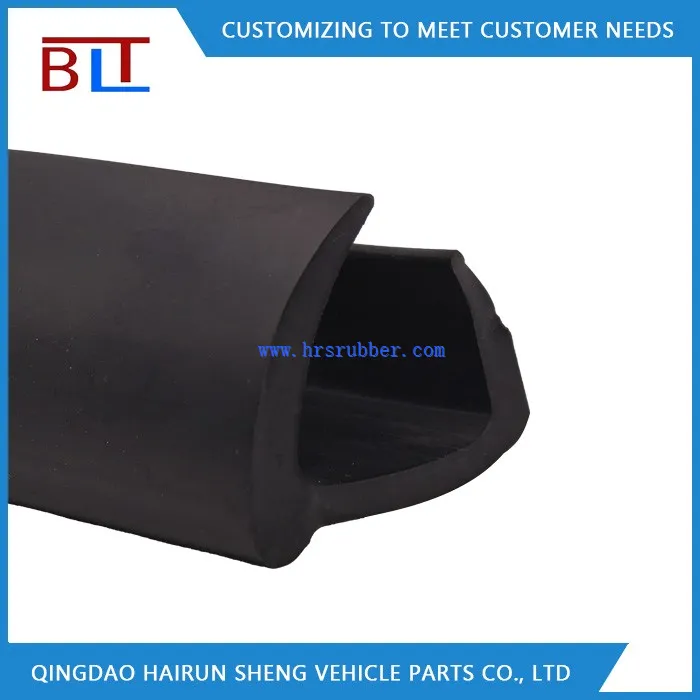
For example, prolonged exposure to UV radiation can break down the molecular structure of the rubber, making it more brittle and reducing its elongation rate. Similarly, exposure to high temperatures can cause the rubber to harden, while low temperatures can make it stiff. This is why we offer Low Temperature Sealing Rubber Strip that is specifically designed to maintain its flexibility and elongation properties even in cold environments.
Importance of Elongation Rate in Container Strip Seals
Ensuring a Proper Fit
Container strip seals need to be installed around the doors, hatches, and other openings of containers. A high elongation rate allows the seal to stretch and conform to the shape of the opening, ensuring a tight fit. This is especially important for containers that may have slight irregularities in their dimensions due to manufacturing tolerances or wear and tear.
For example, when installing a Container Sealing Strip around a container door, the seal may need to stretch around the corners. If the elongation rate is too low, the seal may not be able to stretch enough, resulting in gaps between the seal and the container, which can lead to leakage of air, water, or dust.
Withstanding Movement and Vibration
Containers are often subjected to movement and vibration during transportation. The elongation rate of the strip seal allows it to absorb these movements without breaking. A seal with a high elongation rate can stretch and contract as the container moves, maintaining its sealing function.
For instance, on a container ship, the containers are constantly moving due to the waves and the motion of the ship. The strip seals need to be able to withstand these dynamic forces without failing. If the elongation rate is insufficient, the seal may crack or tear, compromising the integrity of the container.
Long - Term Performance
A strip seal with a high elongation rate is more likely to have a longer service life. It can better withstand the repeated stretching and contraction cycles that occur during normal use. This reduces the need for frequent replacement of the seals, saving time and money for container owners and operators.
Measuring the Elongation Rate of Container Strip Seals
The elongation rate of container strip seals is typically measured using a tensile testing machine. A sample of the seal is cut to a specific size and shape, and then it is clamped at both ends of the testing machine. The machine gradually applies a tensile force to the sample until it breaks.
During the test, the machine records the change in length of the sample as the force is applied. The elongation rate is then calculated by dividing the increase in length at the point of breakage by the original length of the sample and multiplying by 100%.
Our Products and Elongation Rate
At our company, we take great pride in the quality of our container strip seals. Our EPDM Container Door Gasket is made from high - quality EPDM rubber, which offers an excellent elongation rate of up to 500%. This ensures that our gaskets can provide a reliable and long - lasting seal for your containers.
We also conduct rigorous quality control tests on all our products to ensure that they meet or exceed industry standards. Our testing procedures include measuring the elongation rate, as well as other important properties such as hardness, tensile strength, and compression set.
Conclusion
The elongation rate of strip seals for containers is a critical property that affects their performance, fit, and longevity. By understanding the factors that influence the elongation rate and choosing a high - quality seal with an appropriate elongation rate, you can ensure the proper functioning of your containers and protect your goods from damage.
If you are in the market for container strip seals and have any questions about elongation rate or other technical aspects of our products, please feel free to contact us. We are more than happy to discuss your specific requirements and help you find the best solution for your container sealing needs.
References
- ASTM D412 - Standard Test Methods for Vulcanized Rubber and Thermoplastic Elastomers - Tension
- ISO 37:2017 - Rubber, vulcanized or thermoplastic — Determination of tensile stress - strain properties