

As a supplier of container door seals, I often get asked a crucial question by our clients: "Do container door seals have UV resistance?" This question is not just a casual inquiry; it goes to the heart of the durability and functionality of container door seals in various environments. In this blog post, I'll delve into the science behind UV resistance in container door seals, explain its importance, and discuss how our products measure up in this regard.
Understanding UV Radiation and Its Impact on Container Door Seals
UV radiation, which is part of the electromagnetic spectrum emitted by the sun, can have a significant impact on various materials, including those used in container door seals. There are three main types of UV radiation: UVA, UVB, and UVC. UVC is mostly absorbed by the Earth's atmosphere, but UVA and UVB can reach the surface and cause damage to materials.

UVA radiation, with a wavelength ranging from 320 to 400 nanometers, is known for its long - term effects on materials. It can penetrate deep into the molecular structure of polymers, which are commonly used in rubber container door seals. Over time, UVA can cause the polymer chains to break down, leading to a loss of elasticity and flexibility. This can result in the seal becoming brittle, cracking, and losing its ability to provide an effective barrier against moisture, dust, and air.

UVB radiation, with a wavelength between 280 and 320 nanometers, is more energetic than UVA. It can cause more immediate damage to the surface of the container door seal. UVB can accelerate the oxidation process of the rubber, leading to surface hardening, discoloration, and a reduction in the seal's overall integrity.
The Importance of UV Resistance in Container Door Seals
Container door seals are used in a wide range of environments, from hot and sunny deserts to coastal areas with high levels of UV exposure. In these environments, the ability of the seal to resist UV radiation is crucial for several reasons.
First and foremost, UV - resistant container door seals ensure the long - term functionality of the container. A seal that is damaged by UV radiation may not be able to maintain an airtight and watertight seal. This can lead to moisture ingress, which can cause corrosion of the container's interior, damage to the goods stored inside, and a reduction in the overall lifespan of the container.
Secondly, UV - resistant seals can reduce maintenance costs. When a seal is not UV - resistant, it may need to be replaced more frequently. This not only incurs the cost of the new seal but also the labor cost associated with the replacement. By investing in UV - resistant container door seals, container owners can save money in the long run.
Our UV - Resistant Container Door Seal Products
At our company, we understand the importance of UV resistance in container door seals. That's why we offer a range of products that are designed to withstand the harsh effects of UV radiation.
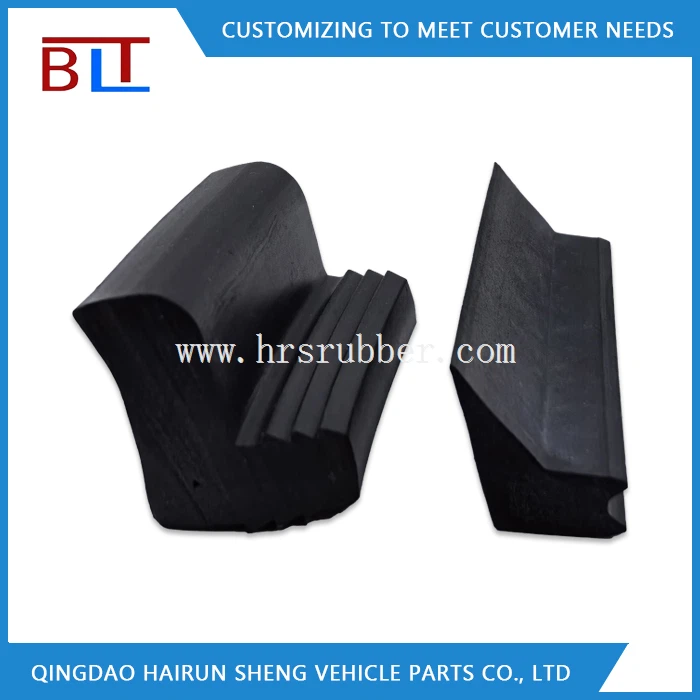
Our Rubber Container Door Seals are made from high - quality rubber compounds that have been specifically formulated to resist UV damage. These seals are tested under extreme UV conditions to ensure that they maintain their elasticity and sealing properties over time. The rubber used in these seals contains additives that act as UV stabilizers, which absorb and dissipate the UV energy before it can cause damage to the polymer chains.
We also offer Strip Seal for Containers. These strip seals are ideal for providing a secondary seal or for use in applications where a continuous seal is required. Our strip seals are made from materials that are highly resistant to UV radiation, ensuring that they can be used in outdoor environments without the risk of premature degradation.

For refrigerated containers, we have developed Refrigerated Container Door Seal Strip. These seals are not only designed to provide excellent insulation but also to resist UV radiation. In refrigerated container applications, UV resistance is especially important as the seals are often exposed to sunlight when the containers are being transported or stored outdoors.
Testing and Quality Assurance
To ensure the UV resistance of our container door seals, we conduct rigorous testing. Our testing procedures include exposing the seals to artificial UV light in a controlled environment for extended periods. This simulates the long - term exposure to sunlight that the seals may experience in real - world applications.
We measure the changes in the physical properties of the seals, such as hardness, elongation, and tensile strength, before and after the UV exposure. If the seals show minimal changes in these properties, it indicates that they have good UV resistance. We also visually inspect the seals for any signs of cracking, discoloration, or surface degradation.
In addition to our in - house testing, we also follow industry standards and regulations for UV resistance. This ensures that our products meet or exceed the expectations of our customers in terms of quality and performance.
Conclusion
In conclusion, UV resistance is a critical factor in the performance and longevity of container door seals. At our company, we are committed to providing high - quality container door seals that can withstand the harsh effects of UV radiation. Our Rubber Container Door Seals, Strip Seal for Containers, and Refrigerated Container Door Seal Strip are all designed with UV resistance in mind.
If you are in the market for container door seals and are concerned about UV exposure, we encourage you to contact us for more information. Our team of experts can help you choose the right seal for your specific needs and provide you with detailed information about the UV - resistant properties of our products. We look forward to the opportunity to work with you and help you find the best container door seal solutions.
References
- ASTM International. "Standard Test Methods for Rubber Property - Effect of Liquids." ASTM D471.
- ISO (International Organization for Standardization). "Rubber, Vulcanized or Thermoplastic - Resistance to Environmental Stress Cracking." ISO 11346.